Five Signs You've Outgrown DIY Payroll
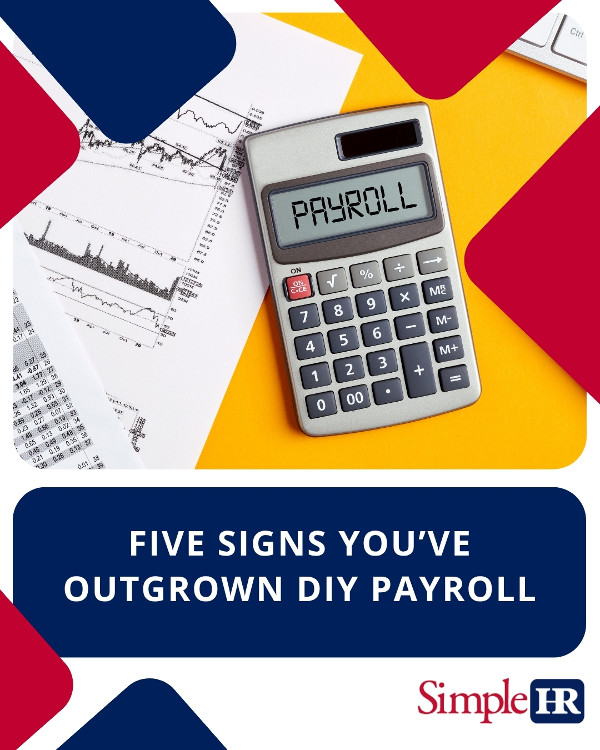
For many small business owners, running payroll yourself starts as a practical decision. You have a handful of employees, the process seems manageable, and keeping another function in-house feels like one more way to control costs.
Then the business grows.
You hire more people. Benefits enter the picture. Someone works overtime. Tax deadlines become harder to track. An employee has a payroll question you can't immediately answer. Before long, what used to take an hour becomes a recurring source of stress and a significant responsibility for someone who already has plenty to do.
Payroll is more than getting everyone paid on time. It touches taxes, compliance, employee records, benefits, reporting, and one of the most important relationships you have with your employees.
How do you know when it's time to stop doing it yourself? Here are five signs.
1. Payroll Is Taking Too Much of Your Time
There is a difference between being able to do something and it being the best use of your time.
If payroll consistently pulls you or a key employee away from revenue-generating work, client service, leadership, or business development, consider the actual cost of keeping the process in-house.
As your team grows, payroll usually becomes more complex, not less. What once involved entering a few hours and issuing payments can expand into managing deductions, overtime, PTO, benefits, new hires, terminations, tax filings, and employee questions.
Your time has value. Payroll should not regularly compete with the work only you can do.
2. You're Worried About Making a Mistake
A payroll error isn't just an accounting inconvenience. It can affect an employee's household, create tax issues, damage trust, and potentially expose the business to penalties or compliance problems.
If you find yourself repeatedly wondering whether taxes were calculated correctly, a deduction was handled properly, or a deadline was missed, that's a good indication your payroll needs have exceeded your current system.
A reliable payroll process should create confidence, not a knot in your stomach every pay period.
3. Your Workforce Has Become More Complicated
Growth introduces variables.
You now have hourly and salaried employees. Some employees earn overtime. Others participate in benefit plans. You've hired remote employees or added workers in different locations. Perhaps you're trying to determine whether a new role should be classified as an employee or independent contractor.
Each new variable creates another opportunity for errors.
The IRS considers multiple factors when determining whether someone is an employee or independent contractor, including behavioral control, financial control, and the nature of the relationship. Simply calling someone a contractor or issuing a 1099 doesn't automatically make that classification correct.
As your workforce evolves, your payroll infrastructure needs to evolve with it.
4. Payroll Information Lives in Too Many Places
One spreadsheet tracks PTO. Another contains employee information. Someone emails updated hours. Benefits deductions live somewhere else. Your accountant has another set of records.
Sound familiar?
Disconnected systems create unnecessary administrative work and increase the likelihood of errors. They can also make it difficult to answer what should be straightforward questions about an employee's pay, leave, deductions, or employment history.
A growing organization needs systems that communicate with each other and give leadership access to reliable information.
5. You're Growing and Want to Keep Growing
Sometimes the clearest sign you've outgrown DIY payroll isn't that something has gone wrong. It's that things are going right.
You're hiring. Revenue is growing. You're adding benefits. You're building a leadership team. You're thinking about the next location, market, or phase of the company.
That's exactly when infrastructure matters.
Waiting until payroll becomes a problem can leave you trying to fix systems while simultaneously managing growth. Putting the right support in place earlier gives your business a stronger foundation for what's next.
Payroll Should Support Your Business, Not Slow It Down
Outgrowing DIY payroll is a good problem to have. It means your business has reached a point where the systems that helped you start may no longer be the systems you need to grow.
The goal isn't simply to hand off an administrative task. It's to create a payroll process that is accurate, efficient, compliant, and easier for both employers and employees to navigate.
At SimpleHR, we help employers manage payroll as part of the bigger picture of employing people, from HR administration and compliance support to benefits and workforce management.
Your business has enough to manage. Payroll doesn't have to be one more thing keeping you up at night.
2025-2026 Employer Update: What You Need to Know Now
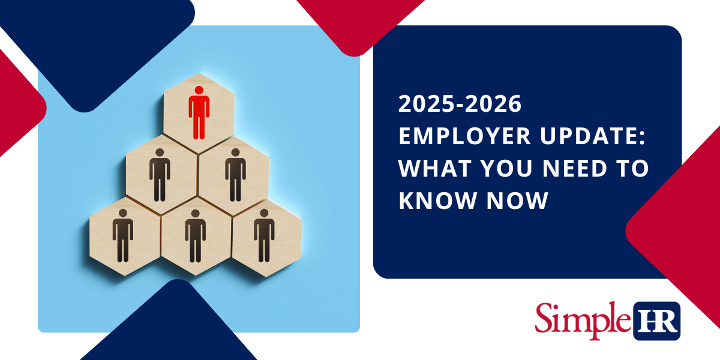
Employment law is moving fast. From a sweeping new federal tax bill to updated Florida wage rules to a reshuffled EEOC enforcement agenda, there's a lot for employers to keep up with. Here's your practical rundown of what matters most right now.
Read More
The One Big Beautiful Bill Act (OBBA)
No tax on tips or overtime — temporarily. For tax years 2025–2028, employees in qualifying roles can deduct their FLSA overtime premium pay and tip income from federal taxable income. This is a sunset provision, not permanent law.
Overtime deduction details: Only the FLSA overtime premium (the extra "half" in time-and-a-half) qualifies. Caps are $12,500 for single filers and $25,000 for joint filers. Voluntary overtime policies and CBA-required overtime are excluded. Qualified overtime must be reported on Form W-2, Box 12, Code TT.
Tip Deduction Details: Applies to employees in 68 IRS-defined tipped occupations (including food & beverage, hospitality, and personal services) and is capped at $25,000 per year; it does not include mandatory service charges or automatic gratuities, and employees generally cannot "double-dip" by claiming both tip and overtime deductions on the same income, so within the same workweek income must be carefully categorized to avoid overlap—employees are encouraged to consult their tax accountant.
Bigger childcare credits: The employer-provided childcare credit increased to up to $500,000 (up from $150,000), covering 40% of qualified expenses. A new calculation method lets employers base the credit on premiums paid for paid leave insurance — not just actual leave taken.
Higher immigration costs: Fees for asylum, parole, and TPS applications have increased. Employers sponsoring overseas workers should adjust their budgets accordingly.
Action items: Separate FLSA and non-FLSA overtime in payroll, map tipped roles to IRS qualifying categories, update W-2 reporting, and consult your SimpleHR team on benefits optimization.
Wage & Hour: What's Changed
White collar salary threshold: Still on pause. The Biden-era increase has been stayed and is not being actively pursued by the current DOL. No increase is expected anytime soon.
DOL enforcement posture: The Department of Labor (now rebranded as the "Department of Labor and Training") is emphasizing education and voluntary compliance over penalties. Liquidated damages are being waived in many audit cases. That said, some investigators are still pursuing audits aggressively — don't mistake a friendlier tone for a free pass.
Joint employment: This administration applies a narrower standard, making it less likely that related entities will be found to be joint employers.
Florida-Specific Updates
Minimum wage: $14.00/hour as of January 1, 2026 — increasing again to $15.00/hour on September 30, 2026.
Tip credit: Remains at $3.02/hour. Tipped minimum wage is currently $10.98/hour. Overtime for tipped employees must be calculated as: (Full Minimum Wage × 1.5) − Tip Credit = Overtime Rate. For January 2026: ($14.00 × 1.5) − $3.02 = $17.98/hour. Several payroll providers have been getting this wrong — verify your calculations.
Third-party vendor compliance: Don't assume your payroll processor or background check vendor is keeping up. Most contracts put compliance liability on the employer. Forms and practices more than a few years old may no longer be current.
Independent Contractor Classification
The current administration has reverted to the "economic reality test", but the core risk factors haven't changed. Watch for:
- Workers performing duties integral to your core business
- Workers who have worked exclusively for your company for an extended period
- Workers following the same schedule and supervision as your employees
EEOC: Fewer Lawsuits, Shifting Priorities
The EEOC filed just 93 merit lawsuits in 2025 — the lowest in roughly 30 years. Of those, 37 involved sex and pregnancy discrimination (10 under the Pregnant Workers Fairness Act) and 11 involved failure to accommodate religious beliefs.
The administration has largely stepped back from disparate impact enforcement — the theory that neutral policies can be discriminatory if they disproportionately affect a protected class. Note that private plaintiffs can still bring these claims independently.
We're Here to Help
Keeping up with changing employment law is a full-time job — and it shouldn't have to be yours. SimpleHR's certified HR professionals and payroll specialists stay current so you can stay focused on your business. Contact us today to make sure your practices are up to date.
Redefining Performance Management: Building a People-Centric Workplace
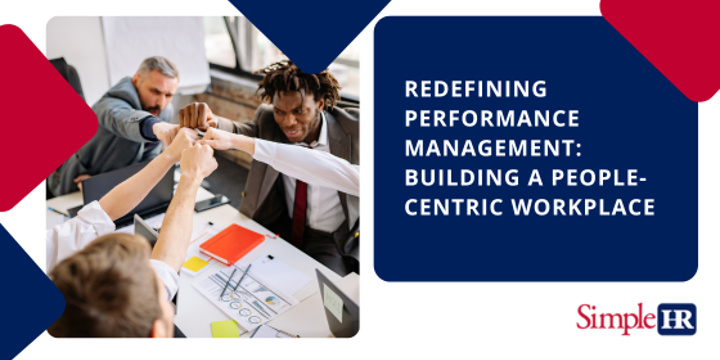
Performance management has evolved far beyond annual reviews and check-the-box evaluations. At SimpleHR, we believe in a people-centric approach that fosters growth, communication, and engagement at every level of your organization.
Read More
Performance management is a strategic, ongoing process designed to unlock employees while aligning their goals with the organization. It involves clear communication of expectations, continuous feedback, and a focus on development.
The Four Stages of Performance Management
- Plan: Define clear performance expectations and set SMART goals for employees to align their efforts with organizational success.
- Monitor: Provide consistent feedback and track progress to ensure employees stay on course.
- Develop: Identify areas for growth and create personalized development plans that enhance skills and build future leaders.
- Rate & Reward: Recognize outstanding performance through meaningful rewards, encouraging motivation and job satisfaction.
Organizations can create a culture of trust and transparency by prioritizing employee well-being, communication, and recognition. This approach not only boosts productivity but also enhances employee retention and satisfaction.
Transform Your Workforce Today
At SimpleHR, we equip leaders with the tools to implement effective performance management strategies that foster individual and organizational success. Ready to build a thriving workplace? Contact us to learn more!

~ Previously on SimpleHR Today ~




* SimpleHR provides HR assistance as a Client benefit. This assistance is provided by an HR professional as general information and is not a substitute for legal advice.
SimpleHR is a Professional Employer Organization (PEO) headquartered in Destin, FL, providing cost-effective human resource outsourcing while managing employee risks for client businesses for over 23 years. PEO license number EL374
Stay Connected

36474 Emerald Coast Parkway, Building B
Destin, Florida 32541
Toll Free: (888) 207-6703
Destin: (850) 650-9935
Pensacola: (850) 542-0566
Panama City: (850) 588-0926
Fax: (850) 650-9936
24-Hour Injury Line: (850) 974-2406