2025-2026 Employer Update: What You Need to Know Now
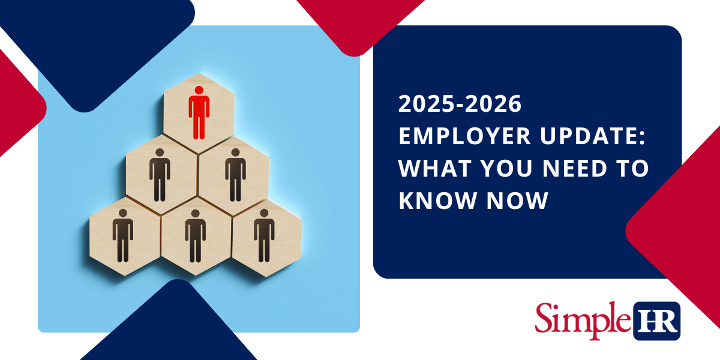
Employment law is moving fast. From a sweeping new federal tax bill to updated Florida wage rules to a reshuffled EEOC enforcement agenda, there's a lot for employers to keep up with. Here's your practical rundown of what matters most right now.
The One Big Beautiful Bill Act (OBBA)
No tax on tips or overtime — temporarily. For tax years 2025–2028, employees in qualifying roles can deduct their FLSA overtime premium pay and tip income from federal taxable income. This is a sunset provision, not permanent law.
Overtime deduction details: Only the FLSA overtime premium (the extra "half" in time-and-a-half) qualifies. Caps are $12,500 for single filers and $25,000 for joint filers. Voluntary overtime policies and CBA-required overtime are excluded. Qualified overtime must be reported on Form W-2, Box 12, Code TT.
Tip Deduction Details: Applies to employees in 68 IRS-defined tipped occupations (including food & beverage, hospitality, and personal services) and is capped at $25,000 per year; it does not include mandatory service charges or automatic gratuities, and employees generally cannot "double-dip" by claiming both tip and overtime deductions on the same income, so within the same workweek income must be carefully categorized to avoid overlap—employees are encouraged to consult their tax accountant.
Bigger childcare credits: The employer-provided childcare credit increased to up to $500,000 (up from $150,000), covering 40% of qualified expenses. A new calculation method lets employers base the credit on premiums paid for paid leave insurance — not just actual leave taken.
Higher immigration costs: Fees for asylum, parole, and TPS applications have increased. Employers sponsoring overseas workers should adjust their budgets accordingly.
Action items: Separate FLSA and non-FLSA overtime in payroll, map tipped roles to IRS qualifying categories, update W-2 reporting, and consult your SimpleHR team on benefits optimization.
Wage & Hour: What's Changed
White collar salary threshold: Still on pause. The Biden-era increase has been stayed and is not being actively pursued by the current DOL. No increase is expected anytime soon.
DOL enforcement posture: The Department of Labor (now rebranded as the "Department of Labor and Training") is emphasizing education and voluntary compliance over penalties. Liquidated damages are being waived in many audit cases. That said, some investigators are still pursuing audits aggressively — don't mistake a friendlier tone for a free pass.
Joint employment: This administration applies a narrower standard, making it less likely that related entities will be found to be joint employers.
Florida-Specific Updates
Minimum wage: $14.00/hour as of January 1, 2026 — increasing again to $15.00/hour on September 30, 2026.
Tip credit: Remains at $3.02/hour. Tipped minimum wage is currently $10.98/hour. Overtime for tipped employees must be calculated as: (Full Minimum Wage × 1.5) − Tip Credit = Overtime Rate. For January 2026: ($14.00 × 1.5) − $3.02 = $17.98/hour. Several payroll providers have been getting this wrong — verify your calculations.
Third-party vendor compliance: Don't assume your payroll processor or background check vendor is keeping up. Most contracts put compliance liability on the employer. Forms and practices more than a few years old may no longer be current.
Independent Contractor Classification
The current administration has reverted to the "economic reality test", but the core risk factors haven't changed. Watch for:
- Workers performing duties integral to your core business
- Workers who have worked exclusively for your company for an extended period
- Workers following the same schedule and supervision as your employees
EEOC: Fewer Lawsuits, Shifting Priorities
The EEOC filed just 93 merit lawsuits in 2025 — the lowest in roughly 30 years. Of those, 37 involved sex and pregnancy discrimination (10 under the Pregnant Workers Fairness Act) and 11 involved failure to accommodate religious beliefs.
The administration has largely stepped back from disparate impact enforcement — the theory that neutral policies can be discriminatory if they disproportionately affect a protected class. Note that private plaintiffs can still bring these claims independently.
We're Here to Help
Keeping up with changing employment law is a full-time job — and it shouldn't have to be yours. SimpleHR's certified HR professionals and payroll specialists stay current so you can stay focused on your business. Contact us today to make sure your practices are up to date.
Redefining Performance Management: Building a People-Centric Workplace
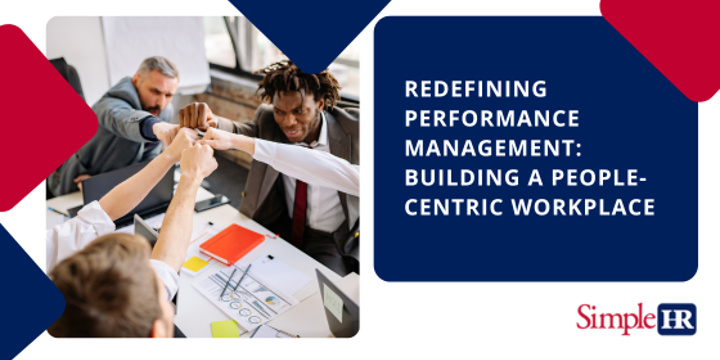
Performance management has evolved far beyond annual reviews and check-the-box evaluations. At SimpleHR, we believe in a people-centric approach that fosters growth, communication, and engagement at every level of your organization.
Read More
Performance management is a strategic, ongoing process designed to unlock employees while aligning their goals with the organization. It involves clear communication of expectations, continuous feedback, and a focus on development.
The Four Stages of Performance Management
- Plan: Define clear performance expectations and set SMART goals for employees to align their efforts with organizational success.
- Monitor: Provide consistent feedback and track progress to ensure employees stay on course.
- Develop: Identify areas for growth and create personalized development plans that enhance skills and build future leaders.
- Rate & Reward: Recognize outstanding performance through meaningful rewards, encouraging motivation and job satisfaction.
Organizations can create a culture of trust and transparency by prioritizing employee well-being, communication, and recognition. This approach not only boosts productivity but also enhances employee retention and satisfaction.
Transform Your Workforce Today
At SimpleHR, we equip leaders with the tools to implement effective performance management strategies that foster individual and organizational success. Ready to build a thriving workplace? Contact us to learn more!
Unlocking the Power of Workplace Coaching and Crucial Conversations

Effective leadership requires more than technical expertise or managerial skills in the evolving workplace. It demands a mastery of coaching and navigating crucial conversations with finesse. At SimpleHR, we recognize the transformative power of these skills and their impact on productivity, engagement, and retention.
Read More
Coaching in the workplace is no longer optional—it's essential. Studies show that companies leveraging coaching report productivity rates 88% higher than those without. Coaching equips leaders with the tools to engage employees, foster independence, and drive goal achievement. It's about focusing on strengths, providing actionable feedback, and creating a culture of continuous improvement.
The Role of Crucial Conversations
Difficult conversations often hold the key to progress. When handled effectively, they can strengthen relationships and boost morale by addressing performance issues, resolving conflicts, or guiding employees through change. Managers can turn challenges into growth opportunities by focusing on empathy, active listening, and collaborative solutions.
SimpleHR's Commitment to Leadership Development
Our Passport to Leadership program empowers managers with the skills to coach their teams effectively and confidently navigate challenging conversations. The results are clear: enhanced communication, more robust team dynamics, and a work environment where employees feel supported and valued.
Are you ready to transform your leadership approach? Contact SimpleHR today to learn how our training programs can help you unlock your team's potential and build a thriving workplace.

~ Previously on SimpleHR Today ~





* SimpleHR provides HR assistance as a Client benefit. This assistance is provided by an HR professional as general information and is not a substitute for legal advice.
SimpleHR is a Professional Employer Organization (PEO) headquartered in Destin, FL, providing cost-effective human resource outsourcing while managing employee risks for client businesses for over 23 years. PEO license number EL374
Stay Connected

36474 Emerald Coast Parkway, Building B
Destin, Florida 32541
Toll Free: (888) 207-6703
Destin: (850) 650-9935
Pensacola: (850) 542-0566
Panama City: (850) 588-0926
Fax: (850) 650-9936
24-Hour Injury Line: (850) 974-2406